
Rosmarinus officinalis, a key plant for combating various ailments, also offers us several chemotypes of essential oils. It promotes thyroid function and stimulates memory, and is particularly suitable for convalescents, the overworked, and those suffering from depression.
This plant has a long history. The most famous is certainly that of the Queen of Hungary's water . The 72-year-old queen, paralyzed, regained her health and youth thanks to a potion prepared with rosemary and wine, which became known as Hungary's potion.
Rosemary is also one of the plants in the famous Four Thieves Vinegar . A sprig of rosemary was discovered in a tomb in ancient Egypt.
Rosemary is useful in cases of:
– Indigestion, cramps, bloating
– Constipation
– Liver weakness and toxicity
– Gallbladder problems
– Bronchial infections, spasmodic coughs
– Asthma
– Stroke prevention
– Fever
– Flu
– Extreme fatigue, nervous exhaustion
– Rheumatic and joint pain
– Headaches and migraines
– Hypothyroidism
It is common throughout the Mediterranean basin and can reach over a meter in height. The plant has a pleasant, slightly camphoraceous fragrance. The flowering tops are used, harvested at the beginning of flowering. The evergreen leaves can be harvested year-round. Rosemary is cultivated almost everywhere, but according to some authors, only rosemary from the south of France, or the Mediterranean basin, possesses the properties attributed to this plant. While rosemary from these regions is undoubtedly of superior quality, there is probably a touch of chauvinism on the part of these authors, and any properly cultivated rosemary will offer its share of benefits.
Properties:
Rosemary is composed of powerful essential oils that give it digestive, stimulating, detoxifying, diuretic, expectorant, anti-inflammatory, antispasmodic, analgesic, and tonic properties. Rosemary is recommended for those recovering from illness , those suffering from overwork , those experiencing depression , as well as people prone to palpitations, migraines, anxiety, and insomnia.
Rosemary essential oil stimulates the production of protective enzymes by the liver. It activates detoxification enzymes in the liver and stomach. Glutathione-S-transferase (GST) and quinone reductase are activated in mice supplemented with rosemary, demonstrating an ability to inhibit toxic and carcinogenic agents.
The liver-protective and liver-detoxifying effects are obtained through the use of verbenone chemotype rosemary .
It is also beneficial in cases of difficult digestion due to atony of the digestive organs, which it tones while increasing bile secretion and promoting its evacuation.
It is also used in fumigation for asthma . The volatile constituents of rosemary protect mice from dust mite-induced allergic asthma. [1]
For external use, a preparation of rosemary cooked in wine will be used and applied as a poultice to painful swellings of sprains, bruises or joint rheumatism.
Canker sores and tonsillitis will be treated with mouthwashes made from a decoction of leaves.
To strengthen frail, physically weak children and relieve rheumatism, a bath should be taken to which a decoction of rosemary leaves has been added.
Rosemary has been used for thousands of years to preserve meat . This herb contains highly antioxidant chemicals, such as carnosic acid (1.5% to 2.5%) and carnosol (0.3-0.4%). Rosemary's preservative properties are comparable to or superior to those of commercial preservatives such as BHA and BHT.
Carnosic acid is also used by the thyroid gland to produce thyroid hormones.
Rosemary contains compounds that prevent the drop in acetylcholine that occurs in Alzheimer's disease.
It also improves blood circulation in the brain . Inhibitory activity against platelet aggregation has been demonstrated in vitro and in vivo, suggesting a potential preventive antithrombosis effect of rosemary. [2]
According to recent studies, simply breathing in its volatile essences improves memory and intellectual effort.
It is also believed to have an anti-cancer effect . In laboratory studies, rosemary has demonstrated the ability to inhibit aflatoxin in humans, a carcinogen found in many food products intended for human or animal consumption.
Instructions for use:
Infusion : 1 (digestive problems) to 2 (restorative, fatigue) teaspoon(s) of dried herb per cup of boiling water. Or half a handful per liter of water. Let it steep for 10 minutes. Drink 1 to 3 cups per day.
Bath decoction : A handful of plant per liter of water. Bring to a boil for 2 to 3 minutes. Add to bath water.
Tincture : 10 to 15 drops in a glass of water
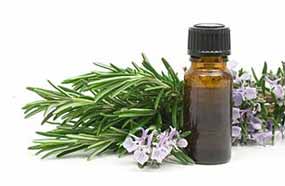
Rosemary (Rosmarinus officinalis) essential oils :
Do not use in essential oil form on pregnant women and young children under 7 years old.
When rosemary is used as an essential oil, it is very important to distinguish between the three different chemotypes available, each with different properties.
For liver, gallbladder, and pancreas detoxification issues , use rosemary verbenone . For internal use: 2 drops diluted in 1 teaspoon of extra virgin, cold-pressed olive oil. Take in the morning on an empty stomach and in the evening. A 3-week treatment should be carried out in the spring and fall. Do not exceed this duration of use.
For external use: 3 drops diluted in 1/2 tsp of your choice of vegetable oil (olive or walnut, for example). Apply by massaging the liver or solar plexus area.
For respiratory problems , use cineole rosemary essential oil . For internal use: 2 drops diluted in 1 teaspoon of extra virgin, cold-pressed olive oil. Two to three times a day.
For external use: 3 drops diluted in 1/2 tsp of your choice of vegetable oil (olive oil, for example). Apply by massaging onto the chest and neck area.
You can also add 2 or 3 drops to a mixture for vapor diffusion (with eucalyptus radiata and Scots pine).
For muscle pain , cramps, rheumatism, and arthritis, camphor rosemary is recommended . This variety is for external use only, applied as a massage oil. Dilute 3 drops in 1/2 teaspoon of carrier oil (such as tamanu, arnica, or another type).
Recipe for Queen of Hungary's Water . There are several versions. Here is one: Mix 3 parts rosemary tincture with 1 part lavender tincture. Consume 1 teaspoon diluted in a glass of water, once a day. Do not give to children. May be used externally as a pure rub (for rheumatic pain and arthritis).
LEARN HOW TO USE ESSENTIAL OILS EFFECTIVELY AND SAFELY. START FOR FREE HERE >>>
Recipe for Four Thieves Vinegar, read the article in Ma Santé Naturelle:


0 Comment:
Post a Comment