Foodly
Home
Business
Internet
Market
Stock
Downloads
Dvd
Games
Software
Office
Parent Category
Child Category 1
Sub Child Category 1
Sub Child Category 2
Sub Child Category 3
Child Category 2
Child Category 3
Child Category 4
Featured
Health
Childcare
Doctors
Uncategorized
Top Ad 728x90
Monday, March 23, 2026
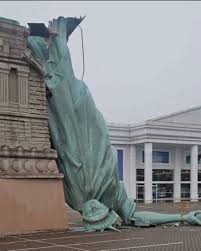
A 115-foot replica of the Statue of Liberty was toppled during a storm...See more
The replica, located at a Havan retail store, was
destroyed, but no injuries were reported.
The base remained, but the upper structure was ruined.
Newer Post
Older Post
View mobile version
0 Comment:
Post a Comment
Subscribe to:
Post Comments (Atom)
Most Viewed
Young Woman caught having s....See more
A Disturbing Wildlife Case That Shocked a Quiet Community in the United States A normally peaceful stretch of forested land in the United ...
UPDATE NEWS.. Read the full breakdown in the first comment
RIGHT NOW, BREAKING NEWS: A devastating tragedy has struck as a passenger plane carrying more than 244 people has just crashed. Emergency ...
JD Vance Boards Plane... He Is Now Going To ....
Two special US envoys who helped negotiate the deal, Steve Witkoff and Jared Kushner, also held talks with Netanyahu on Monday Israel said...
Popular Posts
The Hollow Ridge children were found in 1968: what happened next defied nature. The children were found in a barn that had been locked for 40 years; there were 17 of them. Their ages ranged from 4 to 19. They didn't speak. They didn't cry. And when social workers tried to separate them, they made a sound no human child should be able to make. The local sheriff who responded left three days later and never spoke of the matter again. The state sealed the records in 1973, but one of those girls survived to adulthood. And in 2016, she finally told her story. What she said about her family, about what ran in their veins, changed everything we thought we knew about the Hollow Ridge clan. Hollow Ridge no longer appears on most maps. It's a stretch of wild country in the southern Appalachians, nestled between Kentucky and Virginia, where the hills fold in on themselves like secrets. A place families never leave, where names are repeated generation after generation, where strangers aren't welcome, and where questions go unanswered. For more than 200 years, the hill was home to a single family. They called themselves the Dalhart clan, though some old records use different names: Dalhard, Dalhart, Dale Hart. The variations don't matter. What matters is that they stayed, generation after generation. They remained on that same land, never married off the hill, never attended town churches, never enrolled their children in school. They were known, but not understood; tolerated, but not trusted. By the 1960s, most people assumed the Dalharts were gone. The main house had been abandoned for decades. The fields were overgrown with weeds. No one had seen smoke rising. Read more in the first comment. 👇👇
The hunters called the authorities. By nightfall, the property was surrounded by police, social workers, and a medical team from the count...
Details!⤵️
He moved like a rumor in the halls of power, felt more than seen. The day his voice fell silent, it wasn’t just politics that changed; it ...
This handsome young man was born in 1952. But cruel bullies nearly broke him. His sister died tragically. He battled alcoholism. And all the while, he was rising to become a Hollywood icon. So who is he? 🤔 Name and story are in the comments:
Long before he became one of Hollywood’s most recognizable faces, he was just a talented boy in Houston who refused to hide his passion. B...
America’s Oldest Department Store Announces Nationwide Closures After 200 Years…
For nearly two centuries, America’s oldest department store stood as a symbol of elegance, tradition, and community. Founded in 1824 as a ...
Father and daughter missing in the Pyrenees: five years later, hikers discover what was hidden in a crevice... Five years after the disappearance of Julián Herrera and his nine-year-old daughter, Clara, the mountains seemed to have swallowed them up. The case dominated the headlines for weeks in 2020, when the two vanished into thin air during a short and seemingly safe hike in the French Pyrenees. As time passed, with no leads or traces remaining, the official search was called off. The family, heartbroken and exhausted, clung to the idea that perhaps they had decided to start a new life far away. Others, more realistic, considered the possibility of a tragic fall in some inaccessible place. For years, nothing happened. Until, at the end of August, a Catalan couple decided to explore a rarely visited area near the Brèche de Roland. Among the deep crevices in the rock, they thought they glimpsed something that broke the gray uniformity of the place. He crouched down, shone his cell phone flashlight on the object, and saw a rectangular shape covered in dust and moisture. "It's... a backpack," he muttered, not daring to touch it. The woman approached. As she wiped away what looked like a label with her fingers, they both looked at each other in shock. "Julián Herrera." Their hearts were pounding. It couldn't be a coincidence. The backpack was wedged between two rocks, as if it had fallen from an overhead crevice. The couple took photos and sent them to the gendarmerie, who responded immediately. Within hours, a specialized rescue team arrived by helicopter, sealing off the area. Captain Morel, who had participated in the initial search five years earlier, opened the backpack while wearing gloves. Inside, he found a dented metal bottle, scraps of food in a bag, a crumpled map... and something that chilled him to the core: Clara's blue notebook, recognized by everyone during the investigation. The media pressure returned with a vengeance. The family was alerted, and journalists from both sides of the border crowded the access roads. But the mountain wasn't willing to reveal answers so easily. The crevice where the backpack had been found was only fifty centimeters wide, but it extended several meters deep and much higher. According to experts, it was possible that Julián had attempted to descend from a nearby point in search of a shortcut or shelter, and had become trapped. However, Captain Morel wasn't convinced. Something was strange: the backpack was barely damaged, with no signs of a long fall. Furthermore, there was a pen mark on the map that hadn't been there when the copies were examined five years earlier. "This doesn't add up," Morel whispered to one of the technicians. "If Julián wrote this after getting lost... we need to find out why." The reopened investigation turned into a puzzle. And what the team discovered the next day, descending deeper into the fissure, completely changed the interpretation of the case... Continue reading in the comments.👇👇
Five years after the disappearance of Julián Herrera and his nine-year-old daughter Clara, the mountains seemed to have claimed them forev...
Twelve dead including famous singer in plane crash off remote island.... Read full story in comment💔⤵️
Twelve lives vanished in the dark waters off Roatán, and one of them was a national treasure. A routine flight became a floating graveyard i...
Police are urging everyone to stay away from this area 👇😨🚨 Full story below in comment
Breaking: Hospital Locked Down After Active Shooter Report Terror did not knock. It kicked the doors in. One moment, the hospital hummed w...
Recorded in 1955, this song is still considered one of the best of all time! 😍 The story behind this beautiful and unforgettable song can be found in the first comment. ⬇
Some songs are not listened to, they are felt: this one transcends time with its emotion intact. There are songs you listen to… and others y...
“The father married off his daughter, who was blind from birth, to a beggar — and what happened afterward surprised many people.” Zainab had never seen the world, but she could feel its cruelty with every breath she took. She was born blind into a family that valued beauty above all else. Her two sisters were admired for their striking eyes and graceful figures, while Zainab was treated as a burden — a shameful secret hidden behind closed doors. Her mother died when she was only five years old, and from that moment on, her father changed. He became bitter, resentful, and cruel — especially toward her. He never called her by her name. He called her “that thing.” He didn't want her at the table during family meals, nor outside when guests came over. He believed she was cursed, and when she turned twenty-one, he made a decision that would shatter what little remained of her already broken heart. One morning, he entered her small room where she sat quietly, running her fingers over the worn pages of a Braille book, and dropped a folded piece of fabric onto her lap. “You're getting married tomorrow,” he said flatly. She froze. The words made no sense. Married? To whom? “He's a beggar from the mosque,” her father continued. “You're blind. He's poor. A perfect match.” She felt the blood drain from her face. She wanted to scream, but no sound came out. She had no choice. Her father never gave her choices. The next day, she was married in a rushed, modest ceremony. She never saw his face, of course — and no one described it to her. Her father pushed her toward the man and told her to take his arm. She obeyed like a ghost in her own body. People laughed behind their hands. “The blind girl and the beggar.” After the ceremony, her father handed her a small bag with a few clothes and shoved her toward the man once again. “She's your problem now,” he said, walking away without looking back. The beggar, whose name was Yusha, led her silently down the road. He didn't speak for a long time. They arrived at a broken little hut on the edge of the village. It smelled of damp earth and smoke. “It’s not much,” Yusha said gently. “But you’ll be safe here.” She sat on the old mat inside, holding back tears. This was her life now — a blind girl married to a beggar, living in a hut made of mud and fragile hope. But something strange happened that very first night. Yusha made her tea with careful, gentle hands. He gave her his own blanket and slept by the door, like a guard dog protecting his queen. He spoke to her as if she mattered — asking what stories she liked, what dreams she had, what foods made her smile. No one had ever asked her those questions before. Days turned into weeks. Every morning, Yusha walked her to the river, describing the sun, the birds, the trees with such poetry that she began to feel as though she could see them through her words. He sang to her while washing clothes and told her stories about stars and distant lands at night.She laughed for the first time in years. Her heart slowly began to open. And in that strange little hut, something unexpected happened — Zainab fell in love. One afternoon, as she reached for his hand, she asked gently: “Were you always a beggar?” He hesitated. Then said quietly, “Not always.” But he said nothing more. And she didn't press him. Until one day. She went to the market alone to buy vegetables. Yusha had given her careful instructions, and she memorized every step. But halfway there, someone grabbed her arm violently. “Blind rat!” a voice spat. It was her sister. Aminah. “You're still alive? Still playing wife to a beggar?” Zainab felt tears rise, but she stood tall. “I’m happy,” she said. Aminah laughed cruelly. “You don’t even know what he is. He’s worthless. Just like you.” Then she whispered something that shattered her. “He's not a beggar, Zainab. You were linked to.” Zainab stumbled back home, confused and shaken. She waited until nightfall, and when Yusha returned, she asked again — this time firmly. “Tell me the truth. Who are you really?” That was when he knelt in front of her, took her hands, and said: “You were never supposed to know yet. But I can't lie to you anymore.” Her heart pounded. The next part changes everything. Like this comment first, then check the link
A thunderous knock shook the heavy oak door. Yusha moved to the entrance, his face hardening into the mask of the physician he once was. He ...
She was deemed unfit for marriage, so her father married her to the strongest slave. Virginia, 1856 They said I would never marry. Twelve men in four years came to my father's Virginia plantation, looked at my wheelchair... and walked away. Some were kind. Most were not. "She can't walk down the aisle." "My children need a mother who can chase them." "What's the point if she can't even have sons?" This last rumor, spread by a doctor who had never examined me, spread like wildfire in 1850s Virginia. At twenty-two, I wasn't just disabled. I was defective. Defective goods. My name is Elellanar Whitmore, and by 1856, society had already decided my life was over before it had even begun. No one expected—not the twelve men, not the gossiping neighbors, not even me—that my father's desperate solution would ignite a love so rebellious it would resonate for generations. But before you judge him… you must understand the cage we lived in. Virginia in 1856 was not kind to women. And it was even less kind to women who could not stand. My legs had been useless since I was eight. A horseback riding accident. A fractured spine. Fourteen years in a polished mahogany chair my father had commissioned, so elegant it made society forget what it symbolized. But they never forgot. The chair wasn't the real problem. It was what it represented. Dependence. Fragility. A woman who, according to gossip, was incapable of fulfilling the duties of a wife. My father, Colonel Richard Whitmore, owned five thousand acres of land and two hundred slaves. He could negotiate cotton prices in three different states. But he couldn't negotiate my value on the marriage market. After the twelfth rejection—a fifty-year-old drunk named William Foster, who rejected me even after my father offered him a third of our annual profits—I understood one thing clearly: I would die alone. My father understood this, too. And it terrified him. One evening in March 1856, he called me into his study. "I will marry you to Josiah," he said. I burst out laughing. Not because it was funny. Because it was impossible. "The blacksmith," he clarified. The room fell silent. "Father... Josiah is a slave." "Yes," he said. "I know exactly what I'm doing." I thought he'd lost his mind. What I didn't know was that I was about to meet the man who would change everything I thought I knew about strength... and valor. They called him "the brute." Seven feet ten inches tall, if not shorter. Two hundred pounds of muscle forged from iron. Hands marked with the scars of the forge. Shoulders that barely fit through doors. White visitors whispered about him. Slaves gave him space. He looked like a weapon. The first time he entered our living room, he had to duck to get under the cornice. His eyes never left the floor. "Yes, sir," he said to my father, his voice deep but surprisingly soft. When we were alone, the silence stretched between us like a test neither of us wanted to fail. "Are you afraid of me, miss?" he asked softly. "Should I be?" "No, miss. I would never hurt you." His hands—enormous, strong enough to bend iron—rested gently on my knees. And then I asked him the question that changed everything. "Can you read?" A flash of fear crossed his face. In Virginia, teaching slaves to read was illegal. "Yes," he said finally. "I taught myself." "What do you read?" "Everything I can find. Shakespeare. Newspapers. Anything." "What's your favorite play?" "The Tempest," he replied without hesitation. "Prospero calls Caliban a monster... but Caliban was a slave on his own island. Makes you wonder who the real monster is." And just like that, the brute vanished. In her place was a man who could talk about Shakespeare with more insight than half the men who had rejected me. We talked for two hours. About Ariel and freedom. About being trapped in bodies and systems that defined you before you could even define yourself. When he finally said, "Anyone who can't see beyond a wheelchair is a fool," something inside me opened. For the first time in fourteen years, I felt seen. Not pitied. Not tolerated. Seen. The arrangement began in April. Not a legal marriage—that would have been impossible—but my father entrusted Josiah with the responsibility of my care. He moved into a room adjacent to mine. And slowly, awkwardly, we built a life within an impossible structure. He helped me get dressed—always asking my permission first. He carried me when necessary—as if I weighed nothing. He rearranged my shelves alphabetically just because I asked. And in the afternoons
He says that he is not my wife but he is married. In four years, both men and women have not kept mine on the right side and they were not...
×
Subscribe to our Newsletter
Get exclusive tips and updates directly in your inbox.
Subscribe




0 Comment:
Post a Comment